Sunday, November 25, 2007

MEDITATION FOUND TO INCREASE BRAIN SIZE

2006-08-11

by Daniel G. Amen M.D. Printable page http://www.amenclinics.com/ac/bitn/bitn_print.php?articleID=118

People who meditate grow bigger brains than those who don't. Researchers at Harvard, Yale, and the Massachusetts Institute of Technology have found the first evidence that meditation can alter the physical structure of our brains. Brain scans they conducted reveal that experienced meditators boasted increased thickness in parts of the brain that deal with attention and processing sensory input.

In one area of gray matter, the thickening turns out to be more pronounced in older than in younger people. That's intriguing because those sections of the human cortex, or thinking cap, normally get thinner as we age.

"Our data suggest that meditation practice can promote cortical plasticity in adults in areas important for cognitive and emotional processing and well-being," says Sara Lazar, leader of the study and a psychologist at Harvard Medical School. "These findings are consistent with other studies that demonstrated increased thickness of music areas in the brains of musicians, and visual and motor areas in the brains of jugglers. In other words, the structure of an adult brain can change in response to repeated practice."

The researchers compared brain scans of 20 experienced meditators with those of 15 nonmeditators. Four of the former taught meditation or yoga, but they were not monks living in seclusion. The rest worked in careers such as law, health care, and journalism. All the participants were white. During scanning, the meditators meditated; the others just relaxed and thought about whatever they wanted.

Meditators did Buddhist "insight meditation," which focuses on whatever is there, like noise or body sensations. It doesn't involve "om," other mantras, or chanting.

"The goal is to pay attention to sensory experience, rather than to your thoughts about the sensory experience," Lazar explains. "For example, if you suddenly hear a noise, you just listen to it rather than thinking about it. If your leg falls asleep, you just notice the physical sensations. If nothing is there, you pay attention to your breathing." Successful meditators get used to not thinking or elaborating things in their mind.

Study participants meditated an average of about 40 minutes a day. Some had been doing it for only a year, others for decades. Depth of the meditation was measured by the slowing of breathing rates. Those most deeply involved in the meditation showed the greatest changes in brain structure. "This strongly suggests," Lazar concludes, "that the differences in brain structure were caused by the meditation, rather than that differences in brain thickness got them into meditation in the first place."

Lazar took up meditation about 10 years ago and now practices insight meditation about three times a week. At first she was not sure it would work. But "I have definitely experienced beneficial changes," she says. "It reduces stress [and] increases my clarity of thought and my tolerance for staying focused in difficult situations."

Controlling random thoughts

Insight meditation can be practiced anytime, anywhere. "People who do it quickly realize that much of what goes on in their heads involves random thoughts that often have little substance," Lazar comments. "The goal is not so much to 'empty' your head, but to not get caught up in random thoughts that pop into consciousness."

She uses this example: Facing an important deadline, people tend to worry about what will happen if they miss it, or if the end product will be good enough to suit the boss. You can drive yourself crazy with unproductive "what if" worry. "If, instead, you focus on the present moment, on what needs to be done and what is happening right now, then much of the feeling of stress goes away," Lazar says. "Feelings become less obstructive and more motivational."

The increased thickness of gray matter is not very much, 4 to 8 thousandths of an inch. "These increases are proportional to the time a person has been meditating during their lives," Lazar notes. "This suggests that the thickness differences are acquired through extensive practice and not simply due to differences between meditators and nonmeditators."

As small as they are, you can bet those differences are going to lead to lots more studies to find out just what is going on and how meditation might better be used to improve health and well-being, and even slow aging.

More basic questions need to be answered. What causes the increased thickness? Does meditation produce more connections between brain cells, or more blood vessels? How does increased brain thickness influence daily behavior? Does it promote increased communication between intellectual and emotional areas of the brain?

To get answers, larger studies are planned at Massachusetts General Hospital, the Harvard-affiliated facility where Lazar is a research scientist and where these first studies were done. That work included only 20 meditators and their brains were scanned only once.

"The results were very encouraging," Lazar remarks. "But further research needs to be done using a larger number of people and testing them multiple times. We also need to examine their brains both before and after learning to meditate. Our group is currently planning to do this. Eventually, such research should reveal more about the function of the thickening; that is, how it affects emotions and knowing in terms of both awareness and judgment."

Slowing aging?

Since this type of meditation counteracts the natural thinning of the thinking surface of the brain, could it play a role in slowing - even reversing - aging? That could really be mind-boggling in the most positive sense.

Lazar is cautious in her answer. "Our data suggest that one small bit of brain appears to have a slower rate of cortical thinning, so meditation may help slow some aspects of cognitive aging," she agrees. "But it's important to remember that monks and yogis suffer from the same ailments as the rest of us. They get old and die, too. However, they do claim to enjoy an increased capacity for attention and memory."

"Brain In The News" is offered as a free service to educate people on how the brain relates to our behavior. You can subscribe for free at www.amenclinic.com. You can see over 300 color 3D brain SPECT images at www.brainplace.com.

Sunday, November 18, 2007

Gandhi Quote

"Watch your thoughts; they become your words
Watch your words; they become your actions
Watch your actions; they become your habits
Watch your habits; they become your character
Watch your character; it becomes your destiny"

- Gandhi

It is through our meditation practice that we learn to be still and reconnect with the divine within. It all starts with a heart felt connection to our Truth. The reminder of course is that we are not our thoughts.

Let me suggest a book I am reading now that I love. It is by Tara Brach PhD. She is a clinical psychologist with a strong Buddhist practice. She integrates meditation and psychotherapy in such a wonderfully, refreshing and enlightened way.

Her book is called Radical Acceptance. 5 stars. Much to learn here about the benefits of meditation and developing a personal practice.

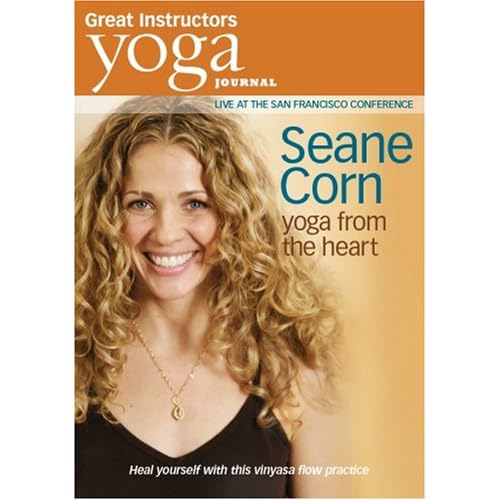
New Seane Corn Yoga DVD - FANTASTIC!


Seane at her best. Live, relational and as genuine as can be. Many of you know I have followed Seane's teaching and growth as a teacher and spiritual leader for years now. She 'walks the talk' and is what yoga is all about. Authenticity and compassion. Untrapped by her celebrity - she uses her platform to make a difference in the world by taking yoga "Off the Mat and Into the World" through her spiritual activism . A truly gifted and extremely intelligent spirit. This DVD will make for wonderful home practice. Integrates the beauty of the vinyasa practice with a wonderful sense of spirituality.

A must have! Out of 5 stars - I give it 10!!!!

"Heal yourself-and the world-through yoga. Filmed live at the Annual Yoga Journal San Francisco Conference, this unrehearsed 90-minute class captures the charisma and soul of one of yoga's great instructors. In this heart-pumping vinyasa flow practice, you'll journey through your body to awaken to your own intuition and life purpose and gain insight into how your yoga practice can empower you to help heal the world. One of the most gifted yoga instructors in America, Seane Corn's dynamic and inspirational style of yoga incorporates both the physical and spiritual aspects of yoga. She is the National Yoga Ambassador for YouthAIDS and the recipient of the 2005 Conscious Humanitarian Award. Seane teaches at Sacred Movement in Santa Monica, California and travels extensively. Learn 32 poses in all, including: Sun Salutations; standing poses; hip openers, and shoulder and spine stretches - Stand-alone chapters allow you to start the class at any point - In-depth interview with Seane Corn"

Wednesday, November 14, 2007

EXERCISE BUILDS STRONG BRAINS!

We’ve known for many years about the physiological benefits of exercise. Certainly it’s good for our hearts, lungs and muscles. Recently, studies have shown the remarkable effect regular exercise has on our brains and mental wellness.

I’ve referred to it as “medicine’s dirty little secret”. In head to head studies, regular aerobic exercise has been shown to be just about as effective as certain popular anti-depression medications for treating clinical depression.

Here’s a recent study reported in USA Today that suggests regular exercise has a significant impact on helping children focus on schoolwork, impulse control and organization. Here’s the story…

By Nanci Hellmich, USA TODAY

Kids who play hard every day may be making their brains, as well as their bodies, stronger. A new study reports that children who play vigorously for 20 to 40 minutes a day may be better able to organize schoolwork, do class projects and learn mathematics.

"Children who are not active may be at a disadvantage academically," says Catherine Davis, an associate professor of pediatrics at the Medical College of Georgia in Augusta. She presented the research last week at the annual meeting of the Obesity Society, a group of weight-loss professionals.

Davis and colleagues worked with 163 sedentary, overweight children, ages 7 to 11, for three months. The children were divided into three groups: a control group that did no physical activity after school; a group that did 20 minutes of vigorous physical activity five days a week after school; and a group that did 40 minutes of such activity on those same days.

The activity groups played intermittent, high-energy running games, such as flag tag, relays, jump rope and modified basketball. They wore heart-rate monitors and were given rewards for maintaining a high average heart rate. Students also were given cognitive-function tests at the beginning and end of the study. They were tested for their math and reading achievement and "executive function."

Executive function includes skills important for planning and organizing, focusing on schoolwork, resisting impulses, self-monitoring and using strategies to achieve goals. Children who have attention deficit disorder have difficulty with those tasks.

Among the findings from the National Institutes of Health-financed study:

  • The children in the 40-minute activity group had significant improvement on an executive-function test compared with the control group. They increased about 4 points on a cognitive-performance scale. Those in the 20-minute group showed about half that improvement.
  • There was a small improvement in math achievement for both exercise groups but no signs of improvement in reading.
  • Those in the exercise groups lost about 1% to 2% of body fat.

The researchers also performed brain scans and found that the children who were exercising appeared to have more neural activity in the frontal areas of their brains, an important area for executive function, Davis says. "The animal literature tells us that exercise, particularly regular exercise, stimulates the growth of blood vessels and neurons in the brain, so we think the same may be happening in the children."

Other studies have shown that executive function improves in older adults who become more physically active, she says. "School systems need to know that to reach their achievement targets, they need to add physical activity to the school day rather than reduce it."

Phillip Tomporowski, a study co-author and exercise psychologist at the University of Georgia in Athens, says exercise "may well improve the underlying mental processes that are involved in a lot of behaviors and academic tasks."

Says Darla Castelli, assistant professor in the department of kinesiology and community health at the University of Illinois at Urbana-Champaign: "This research corroborates several of our studies, which have also examined executive function in kids. We found strong associations between math performance and aerobic fitness among elementary-school-age children."

Howell Wechsler, director of the Division of Adolescent and School Health for the Centers for Disease Control and Prevention, says some children don't have as many opportunities outside school to be as active as children in previous generations.

"Today there is so much more competition for their time with all the attractive options to be sedentary, from hundreds of cable stations to video games and computer games," Wechsler says. "This makes it even more important to have physical education programs and other opportunities for physical activity at school."

So, if your kids aren’t exercising in school (many schools have cut P.E. from their curriculum) it will help them physically and mentally to be involved in some structured aerobic activity. I promise you, a half hour of vigorous activity will reap far more benefit than a half hour staring at a video screen playing the latest game!

And, we adults get a similar benefit from exercise – what a great reason to get the whole family together. Go for a jog or walk, kick a soccer ball around, smack a table tennis ball … you, your family and your brain will be glad you did!

To Your Brain Health,

Daniel

Daniel Amen, M.D.
CEO, Amen Clinics, Inc.
Distinguished Fellow, American Psychiatric Association

New Meetup Group: Gay Mens Yoga and Meditation Group

Monday, November 12, 2007

10 Ways to Outwit Your Appetite

You don't have to be smarter than a quiz-show fifth-grader to learn how to control the urge to eat. Just follow these ingenious tips to keep your appetite under wraps:

Feed it protein for breakfast. You'll be less hungry later on and end up eating 267 fewer calories during the day. At least that's what happened on days when St. Louis University researchers gave overweight women two scrambled eggs and two slices of jelly-topped toast for breakfast rather than about half that protein.

Make it climb a flight of stairs. At home, store the most tempting foods way out of reach. For instance, Cornell University food psychologist Brian Wansink, PhD, keeps his favorite soda in a basement fridge. "Half the time I'm too lazy to run down there to get it, so I drink the water in the kitchen."

Sleep on it. People who don't get their 8 hours of ZZZs experience hormonal fluctuations that increase appetite, report researchers. Learn more about how sleep affects your diet.

Give it something else to think about. When scientists scanned the brains of people eating different foods, they found that the brain reacts to fat in the mouth in much the same way that it responds to a pleasant aroma. So if you feel a craving coming on, apply your favorite scent.

Never let it see a heaping plate. The more food that's in front of you, the more you'll eat. So at a restaurant, ask your waiter to pack up half of your meal before serving it to you, then eat the extras for lunch the next day.

Put it under the lights. You consume fewer calories at a well-lit restaurant table than you do dining in a dark corner. "In the light, you're more self-conscious and worry that other patrons are watching what you eat," explains Wansink.

Talk it down. Entertaining friends with a great story doesn't give you much time to eat up, so you'll probably still have food on your plate when they're done. Once they're finished, call it quits, too.

Offer it a seat. If you sit down to snack -- and use utensils and a plate -- you'll eat fewer calories at subsequent meals.

Satisfy it with soup. Start lunch with about 130 calories worth of vegetable soup and you'll eat 20% fewer calories overall during lunch, say Penn State experts.

Give it little choice. Packages that contain assorted varieties of cookies, candy, dips, cheese, etc., make you want to try all the flavors. The effect is so powerful, says Wansink, that when people are given 10 colors of M&Ms to munch on, not 7, they eat 30% more!

Oh, and one more thing: Feeding your appetite a diverse diet that is low in calories and high in nutrients can make your RealAge as much as 4 years younger. Sweet.

Sunday, November 11, 2007

Candidate Calculator: Which 2008 Presidential Candidate Agrees With You?

Answer the questions on the link to find the 2008 presidential candidate that best aligns with your beliefs. More than 1 million people have already filled it out. Give it a try!

As featured on CNN: The Situation Room

Candidate Caculator

Saturday, November 10, 2007

New Vegetarian Cookbook and another CONSIDERATION for choosing more vegetarian options

Author of a dozen bestselling cookbooks and beloved columnist for The New York Times ("The Minimalist"), Chef Mark Bittman bookends his award-winning modern classic, How to Cook Everything, with How to Cook Everything: Vegetarian the ultimate one-stop resource for meatless meals. Refreshingly straightforward and filled with illustrated recipes, this is a book that puts vegetarian cuisine within the reach of every home cook. You'll want to spend countless days in the kitchen with Bittman's latest culinary treasure.

"First off, we eat too much of that stuff for our health; every single responsible, independent, and impartial study shows as much. But they also show that replacing the beef in your diet with potato chips and soda won’t do you any good. You can be a “vegetarian” and still eat plenty of food that’s bad for you".

"Secondly, the production of animal products as food is a major contributor to global warming. See the UN Report entitled Livestock’s Long Shadow (http://www.fao.org/docrep/010/a0701e/a0701e00.htm), which says, ultimately, that 18 percent of greenhouse gasses are a direct result of the production of animals for human consumption. " - Mark Bittman

Order the book here: Amazon.com: How to Cook Everything Vegetarian: Simple Meatless Recipes for Great Food (How to Cook Everything): Books: Mark B. it just came out a few weeks ago and already has received mostly 5 stars. I just made the black bean burgers with cashews and carrots below which is his recipe and they are fantastic!

And I would add the Hindu concept of AHIMSA - doing non-violence to self or other sentient beings (which includes animals!)..Ahimsa (Devanagari: अहिंसा; IAST ahiṃsā) is a Sanskrit term meaning non-violence (literally: the avoidance of violence - himsa) It is an important tenet of the religions that originated in ancient India (Hinduism Buddhism and especially Jainism). Ahimsa is a rule of conduct that bars the killing or injuring of living beings It is closely connected with the notion that all kinds of violence entail negative karmic consequences The extent to which the principle of non-violence can or should be applied to different life forms is controversial between various authorities movements and currents within the three religions and has been a matter of debate for thousands of years... More info at http://en.wikipedia.org/wiki/Ahimsa

Black Bean Burgers with Cashews and Carrots
From Chef Mark Bittman
Makes 6 burgers

The marvelous Mark Bittman gave us the idea for combining black beans and oats for a burger that has great texture and looks just like the real thing. These are fine plain, with a squeeze of lemon, or with a big spoonful of Avocado and Black Bean Salsa.

Note: If you cook the beans yourself, take them off the heat and drain them while they still retain a little texture.

1 large celery rib, coarsely cut up
1 medium-large carrot, peeled and shredded
12 large roasted cashews
2 cups cooked or canned organic black beans, rinsed and drained well
1/3 cup steel-cut oats
1 1/2 teaspoons organic vegetable bouillon powder
1 teaspoon ground cumin
1 teaspoon rice vinegar
1 tablespoon extra virgin olive oil, plus more for the pan
Yellow cornmeal

Put the celery, carrot, and cashews in a food processor. Pulse to chop coarsely. Add the beans, oats, bouillon powder, cumin, vinegar, and 1 tablespoon olive oil. Pulse until just mixed evenly. Cover and refrigerate for at least 2 hours, or overnight.

Form the bean mixture into 6 patties. Dust lightly with cornmeal to coat both sides. Heat the olive oil in a large skillet over medium heat. Add the patties and sauté for 2 to 3 minutes on each side, until lightly browned. Or bake in a 375 degree F oven for about 15 minutes. Let sand for 2 to 3 minutes to firm up before serving.

Tuesday, November 06, 2007

Air Fresheners Leave Your Indoor Air Anything But

There’s always been a something a little unsettling about the idea of revitalizing the air inside our homes by spraying things with names like “Meadow Mist” and “Mountain Breeze” all over the place, especially when such products hardly smell like either. Now two new studies have found that our suspicions were correct: synthetic air fresheners are coating our homes and filling our air with unsafe chemicals.

Used in 75% of American households, air fresheners are a huge industry that generates sales of $1.72 billion a year. Found in everything from plug-in disposable appliances and fake candles to sprays and peel-and-stick evaporative disks, these products don’t actually eliminate odors but merely use one of several strategies to make you think they’ve vanished. Some products simply cover up bad smells with stronger chemicals. Some use a nerve-deadening agent to reduce your ability to smell in the first place; while others coat the inside of your nasal passages with a film that stops smells from getting through. Now a new study from the Natural Resources Defense Council (NRDC) finds they’re doing something else as well: polluting our indoor air whenever we use them.

The NRDC tested 14 different air fresheners, including those labeled “all-natural,” and found that all but two contained measurable levels of phthalates, synthetic chemicals linked to asthma, endocrine disruption, and other serious health problems. (For more about phthalates see the February 2006 issue of the Non-Toxic Times at http://www.seventhgeneration.com/making_difference/newsletter_article.php?article=110&issue=25.) The amounts of phthalates found ranged from 0.12 parts per million (ppm) to an extraordinary 7,300 ppm. Only two of the tested products contained no phthalates at all.

Researchers said that though the number of products tested was small and couldn’t be said to form a representative sampling, the study’s results clearly indicate the need for more comprehensive testing of these common consumer products, especially in light of the fact that the federal government neither tests air fresheners nor requires their manufacturers to list product ingredients or adhere to any specific safety standards.

In response to the study, Walgreens stores, whose private label air fresheners contained the highest levels of phthalates reported by the study, removed the offending products from their shelves in a commendable example of a company taking swift action to right a toxicological wrong.

Hot on the heels of that decision came news of a study published in the American Journal of Respiratory and Critical Care Medicine, which found that the use of spray cleaners in general greatly increases the risk of contracting asthma. Researchers in Barcelona, Spain found that test subjects who used spray cleaners at least once a week had a 30-50% greater chance of developing this respiratory disease and concluded that as many as one in seven cases of adult asthma could be blamed on exposure to spray cleaners. The study singled out conventional glass cleaners, furniture sprays, and air fresheners as particularly likely to trigger the ailment.

Clearly, conventional air fresheners have no place in a healthy home. In addition to phthalates, air freshener toxins can include naphthalene, phenol, cresol, dichlorobenzene, and xylene among many others. These chemicals have been implicated in cancer, neurological damage, reproductive and developmental disorders and other conditions.

For these reasons, indoor air quality experts recommend against using air fresheners or room deodorizes of any kind. Instead, try these safe methods to freshen the air in your home:

• Locate sources of odors and eliminate them when and wherever possible. Since many odors are the result of microbial action, spraying trouble spots and potentially problematic areas (like trash cans, compost containers, etc.) with an undiluted 3 percent solution of hydrogen peroxide (the concentration typically available in stores) will remove many odors.

• Use natural minerals like baking soda and borax to control common odor sources and to deodorize when you clean.

• Keep windows open as much as possible to let bad air out and good air in. If odors are still troubling, invest in an air purifier with activated carbon filtration, a strategy that can remove odors.

• To scent indoor air, place a drop of a natural essential oil like lavender or mint on a cold light bulb, or add a dozen drops to a bowl of water placed on a radiator or wood stove. You can also boil fragrant dried herbs in a pot of water to release a fresh smell.

• A natural mineral called zeolite is available in packets that will absorb odors when hung in problem areas like musty basements and closets.

• Make your own sprays from essential oils and other natural ingredients. For recipes and more information, we recommend the book Better Basics for the Home, by Annie Berthold Bond.

To learn more about the NRDC study, visit http://www.nrdc.org/health/home/airfresheners/contents.asp. For more information about the research published by the American Journal of Respiratory and Critical Care Medicine, please see http://ajrccm.atsjournals.org/cgi/content/abstract/176/8/735.